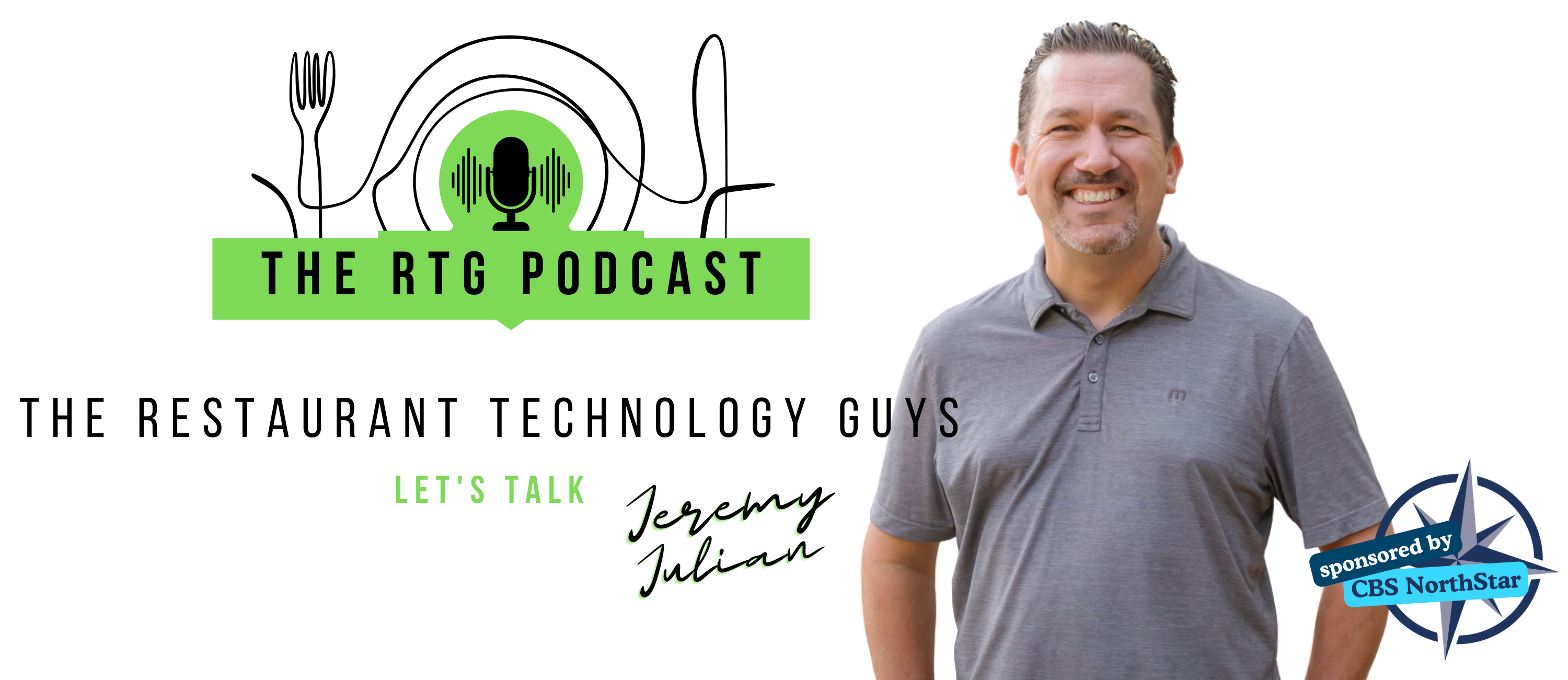
TL;DR: Jon Harmeling runs a Chick-fil-A in Miami Shores, Florida with 89 team members from 19 different countries. He is also a West Point graduate who taught systems engineering there and served as an operations officer in Afghanistan. His argument in this episode is that almost everyone using AI in a restaurant is using it for success — faster, cheaper, more efficient — and almost nobody is using it for significance. The example that makes it concrete: one week his systems flagged a team member for going into overtime. The next week, asked a different question, the same data surfaced that she had volunteered to cover shifts for two teammates whose families were dealing with health issues.
In this episode
- Guest: Jon Harmeling — Chick-fil-A Owner/Operator, Miami Shores, Florida
- Also: keynote speaker on frontline AI leadership at jonharmeling.com, which also answers at aiforsignificance.com
- Background: West Point graduate, retired U.S. Army, instructor in West Point’s Department of Systems Engineering, operations officer in Afghanistan
- Host: Jeremy Julian, President & Chief Revenue Officer, CBS NorthStar
- Also mentioned: Chick-fil-A, Claude, Claude Cowork, Slack, DoorDash, Uber Eats, Grubhub, Postmates, Google Reviews, Amazon, Tim Tebow, LifeSurge, In-N-Out, West Point
What Does “AI for Significance” Actually Mean?
It means pointing the same tools at a different question. Jon’s framing is that most restaurant AI is aimed at throughput — schedule faster, order faster, answer the review faster. All of that is real and he does plenty of it. But he thinks the more interesting use is asking the software to tell you something about your people that you would never have had time to find on your own.
“I think AI has been phenomenal to help managers get stuff done, be more productive, be more efficient. I just don’t think enough of us are using AI for leadership, and using AI for significance.”
Jon Harmeling, Chick-fil-A Owner/Operator, Miami Shores
I got genuinely fired up about this one. We were twenty minutes into the conversation before I remembered to hit record.
What Happened When He Asked Who Was Going Unrecognized?
This is the story that makes the whole episode. The morning we recorded, Jon gave Claude access to his Slack and asked one question: who on our team is unrecognized right now? He had no idea what it would come back with.
It came back with a team member who had come to the United States from Haiti. And the week before, that same person’s name had surfaced for a very different reason — flagged because she had worked an unscheduled double and was heading into overtime.
“It said, hey Jon, she actually volunteered to take the shift for two other employees so they could go home and be with their families who were going through some health issues. AI for success says flag this person, this is bad. AI for significance says, next time you see her, give her a fist bump and say I see you working hard.”
Jon Harmeling
Same person, same data, same week’s worth of Slack messages. The only variable was the question. And he points out the part that would have made this impossible before: the two of them do not share a language.
What’s the Difference Between Management and Leadership Here?
Jon uses the two words deliberately, and the distinction is the spine of everything else he says. Management is task-focused and transactional — getting things done. Leadership is people-focused and transformational. Management asks how much did we accomplish. Leadership asks who did we bring along, and who is better for having interacted with us.
His point is not that management is beneath anyone. It is that a busy restaurant pulls you into management by default, all day, every day, and that you can stand three feet from a teammate who is struggling and never know it. Rick Rosenfield made a version of the same argument about what actually scales in California Pizza Kitchen Scaled on Culture — Rick Rosenfield: the operations are the easy part to copy.
Why Does a Chick-fil-A Operator Care About This At All?
Because of how he got here, and he tells it plainly. Jon spent his career in the Army — West Point, Germany, Afghanistan, about twelve or thirteen moves — and retired earlier than he expected. He met a Chick-fil-A executive who was serving in the Army Reserve, was assigned to teach alongside him at West Point, and who took him under his wing. That relationship is why he applied to be an operator. He called his wife to tell her after he had already submitted the application.
Application to selection took about five years, with the pandemic sitting in the middle of it. In that gap he took a work-from-home job that was fine on paper and had no juice in it.
Then he went to a LifeSurge event where Tim Tebow was speaking, and heard a line he has not been able to put down since.
“The greatest tragedy in one’s life is to be successful at things that don’t matter.”
Tim Tebow, quoted by Jon Harmeling
He rode home with his dad and told him he was chasing success instead of significance, and that he wanted to build something that mattered. His father said he was all in. Jon quit his job that Friday. His dad died in his sleep on the Saturday.
I am not going to dress that up. He has said publicly that what followed was a dark stretch, and he is candid about it because he thinks other operators have been there too. What came after was the call from Chick-fil-A, a restaurant in Miami Shores, and a line out the door from the morning they opened at 6:30.
Where Should an Operator Actually Start?
Small, and with something repeatable. Jon’s advice is to tinker — his word — rather than architect. Give it your actual restaurant address rather than a generic description and see what it tells you about your own competitive set. He describes an operator discovering that the competitor down the road was about to run a campaign they were already advertising for.
His filter for what deserves automation is the most practical thing in the episode: if a task takes less than thirty seconds, just do it. If it happens every day, every week or every month, that is your candidate.
His own first build was onboarding. He does not want to spend his intellect noticing that a new hire needs a large polo and then going to a website to order a large polo. So there is an agent that does it.
What Is He Asking It to Watch That He Never Had Time For?
The delivery marketplaces, mostly, and local events. He is honest that he had not been reading the reviews on DoorDash, Uber Eats, Grubhub and Postmates in any real depth, and that plenty of operators have not either. That is now a standing instruction rather than an intention.
The one that stuck with me was local events. There had just been an enormous global soccer tournament in his market, and his point was that an agent watching for events near the restaurant could have flagged the watch parties that had no food vendor yet. That is catering revenue that walks past you while you are running lunch.
Eric Lam and I went through the operational side of this kind of automation in How AI Is Transforming Drive-Thru Performance — Eric Lam. Jon’s version is the same capability pointed at opportunity rather than speed.
How Do You Mine 89 People’s Goals in 75 Seconds?
You have to have collected them first, and this is the part I would steal outright. Jon’s team keeps what he calls baseball cards on every employee — a photo, a name, and a short bio the team member wrote themselves. Some of it is ordinary. Some of it is what people actually want out of their lives.
So he pointed AI at the documents he already had and asked it to build a leadership development program and a goal-tracking chart. What came back, in about 75 seconds, was all 89 team members and what they are working toward. One is months from a bachelor’s degree. One wants to be a firefighter. One wants to be a neurosurgeon. One wants to own a Chick-fil-A. One wants to join the military — and someone from the team joined the FBI last month.
“Information without action is useless as leaders. That’s neat, they want to accomplish stuff, I hope they do it — no, you missed the whole point. That’s where we have to take this and figure out how can I help my team accomplish these goals.”
Jon Harmeling
He also notes, almost in passing, that his 89 people represent 19 countries, and that the American dream is quite literally being served on waffle fries in his building. Sven Jensen and I got into the adjacent problem — what you can actually offer that workforce — in Employee Benefits in Restaurants — Sven Jensen.
What About Operators Who Think It Will Just Get Things Wrong?
Jon thinks the concern is completely valid and answers it with process rather than reassurance. Trust but verify. Put information in, let it work, and read every line. Do not take any response as gospel. When it is wrong, correct it — he compares it to steadying a kid on a bike, a nudge here and a nudge there rather than a lecture.
He also suggests running a parallel process for a while: do the task the way you have always done it, do it with AI, and compare the two. That costs you a little time and buys you the confidence to stop double-checking.
The Amazon Demo He Uses on Skeptics
A friend of his had exactly the fear you would expect about giving AI access to business systems. So Jon had him open a browser, sign in to his own Amazon account, add the Claude browser extension, and type one thing: I am going to Miami next week on vacation with my three-year-old niece and I want to buy a toy for the beach.
Then just watch the cursor. It searches, it finds the highest-rated option, it adds it to the cart, and it comes back and says your cart is ready, please review. Nothing was bought. Nothing was risked. But the abstraction turned into something the guy could see.
Where Does the Human Stay in the Loop?
Right before the submit button, and Jon is firm about it. Do the analysis, produce the drafts, do all of the work — and stop short of sending.
The reason is not only risk. It is that the whole point collapses if you automate the caring part.
“What I don’t want is for folks to get an automated birthday email that came from Jon who cares so much — and in reality I had no idea it was their actual birthday.”
Jon Harmeling
The pattern he wants instead: the system reminds him about the health issue, tells him the person is not working tomorrow, and he follows up in person on Wednesday morning. The software finds the moment. He shows up for it.
How Do You Run One-on-Ones in a Restaurant That Never Slows Down?
Not on the floor, which anyone who has tried already knows. Jon’s description is exact: you get to sentence three and there is a guest issue, you get to sentence four and a machine goes down. So the one-on-one has to be scheduled, and it has to be somewhere else — a coffee shop, off-site, out of the building.
He is candid that his own version of this has been informal. It happened, it worked, and it was nowhere near as good as it could be. So he has an automation reaching out to his directors to set up one-on-one time, and he is building a leadership development program around it.
One structural note worth copying: he does not want it to be Jon to 89 people. It is Jon to his directors, directors to shift leaders, shift leaders to trainers, trainers to team members. The automation nudges each layer, including the follow-up — what did you learn, and how can I help you.
What Do You Do With the Time It Gives Back?
This is the whole question, and Jon asks it better than I can paraphrase: as you buy back your time, do you find more busy work, or do you lead?
He is careful not to romanticize it. You have to run a profitable business — you can be the nicest person in the world and still lead your team into closing the doors. Success is not the enemy. Success at the expense of significance is.
What I have pushed my own team toward is the same starting move: have Claude go back through your calendar for the last month and tell you where your time actually went. It is one of the few technologies where you can ask it the question you have always wanted answered and get a real answer. Michael Ungaro described the same discipline applied to marketing in Why Storytelling Saved San Pedro Fish Market — Michael Ungaro, and Pat Venn to guest acquisition in The Recommendation Economy Comes to Restaurants — Pat Venn, PRIMA.
Are You Too Late to Start?
No, and Jon has the cleanest line I have heard on it: AI is never going to be worse than it is today. If you feel like you missed it, you are in the first inning.
He walked the ordinary path in himself — chatbot first, then analysis, then the browser extension, then agents that actually do the work. Luke Christian and Jake Philpotts made a related point about picking your moment in Surcheros: The Tex-Mex Franchise Winning in Towns Everyone Else Skips: the operators who move while everyone else is still skeptical tend to keep the lead.
What Should You Order at Chick-fil-A?
Jon’s go-to is the spicy sandwich with pepper jack cheese and no pickles, which he admits might not delight everyone at the support center. The first time he ate it was across a table from his dad at a Chick-fil-A back home, before he ever applied to be an operator.
He would also like people to look past the sandwich — the salads, the wraps, the mac and cheese, and the grab-and-go breakfast with fresh-made biscuits, which I will vouch for as some of the best in the country. His wife’s recent discovery: mac and cheese with hot sauce stirred into it.
How Do You Follow Jon Harmeling?
Start at jonharmeling.com — and if you are listening rather than reading, aiforsignificance.com redirects there, which he set up precisely because nobody can spell his name from audio. He is posting field notes: here is the experiment, here is how it actually turned out, here is the lesson. He is also on LinkedIn. And if you are near Miami Shores, go see the restaurant and tell him you heard him here.
Frequently Asked Questions
What is the difference between using AI for success and using AI for significance?
Both use the same tools; they ask different questions. AI for success targets throughput — scheduling, ordering, reviews, admin. AI for significance targets people: who on the team is going unrecognized, who has a goal you could help with, who needs a check-in. Jon Harmeling’s example is a team member flagged one week for approaching overtime, and surfaced the next week as someone who had covered shifts for teammates with family emergencies.
What should a restaurant automate with AI first?
Something repeatable and low-stakes. Jon’s rule: if a task takes under thirty seconds, just do it — building an agent is not worth it. If it repeats every day, week or month, that is the candidate. His own first build was onboarding, including ordering uniforms, because that work needs doing but does not need his judgment.
How do you stop AI from sending something embarrassing to your team?
Stop it short of the submit button. Jon has the system do the analysis and produce the draft, then hand it to a human to send. His reasoning is as much about sincerity as safety: an automated birthday message from a boss who did not know it was your birthday is worse than no message at all.
Is it too late for a restaurant operator to start using AI?
No. As Jon puts it, AI will never be worse than it is today, and operators who feel behind are still in the first inning. He suggests starting by giving it your actual restaurant address rather than a generic prompt, reading every line it returns, and running a parallel process against the way you do the task now.
How do you find time for one-on-ones in a busy restaurant?
You schedule them and you leave the building. Jon’s experience is that an on-floor conversation dies by the third or fourth sentence — a guest issue, a machine down. He uses automation to book the meetings and to cascade them through the org rather than running all 89 relationships himself: owner to directors, directors to shift leaders, shift leaders to trainers.
Takeaways
- Change the question, not the tool. The overtime flag and the thank-you were the same data asked two different ways.
- Collect the goals before you need them. The 75-second answer only existed because the bios had been gathered for years.
- Under thirty seconds, just do it. Automate what repeats, not what is merely annoying once.
- Stop before submit. The draft is the machine’s job. Sending it is yours.
- Cascade it. Owner to directors to shift leaders to trainers — not owner to 89 people.
- Then answer the real question. You bought back the time. Busy work, or leadership?
Prefer to read it? The full transcript of episode 357 is available, with speaker labels and section headings: Jon Harmeling on AI for Significance — Full Transcript.
Thanks to our sponsors. Restaurant Technologies keeps cooking oil handling out of your team’s hands and off your floors, and Yelp helps operators turn discovery into a seated guest. We appreciate them making this show possible.
Thanks for hanging out with us this week. If you haven’t already subscribed, please do — and make it a great day.


